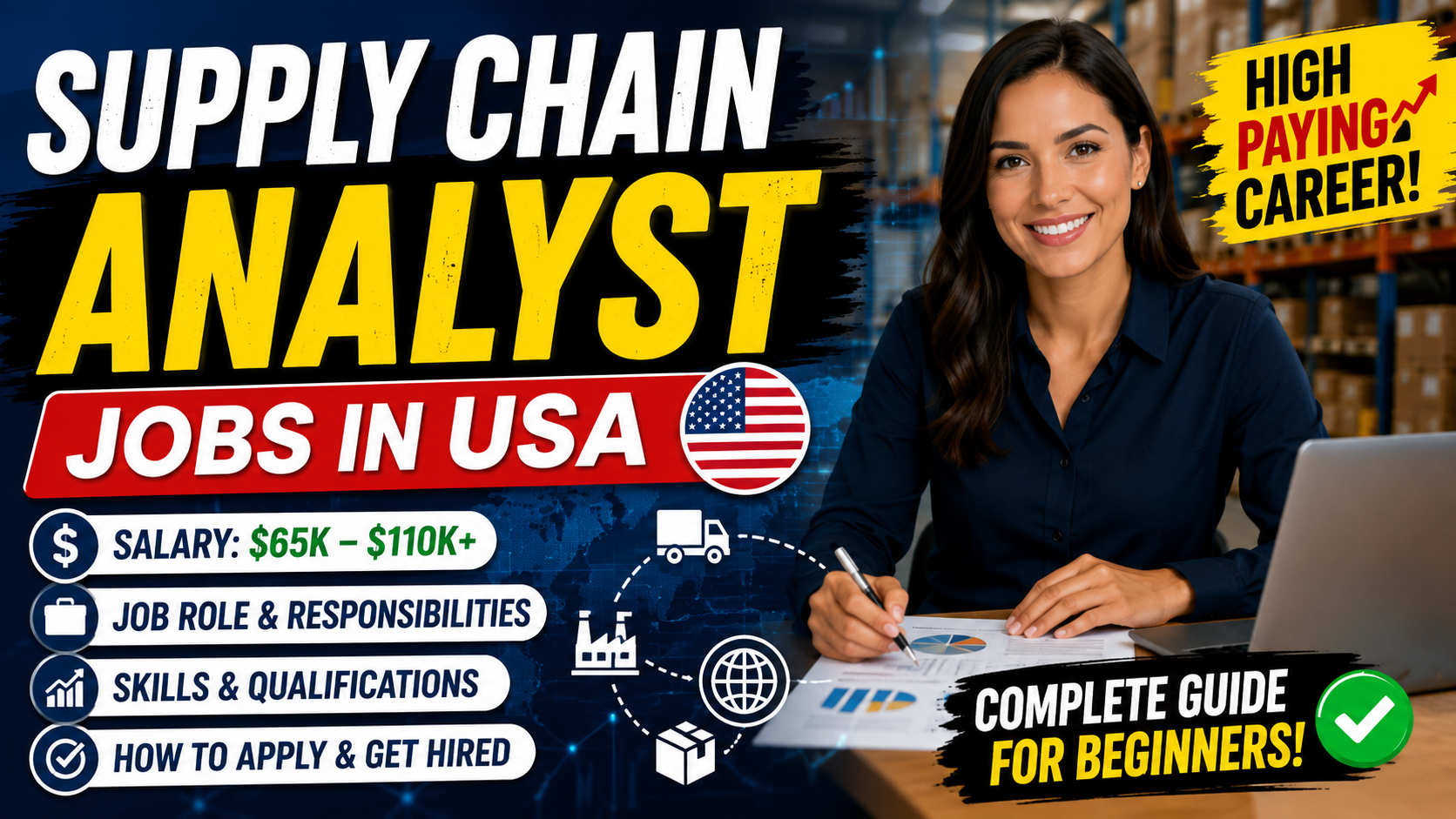
Supply Chain Analyst jobs are among the fastest-growing careers in the United States. As businesses continue to improve efficiency and reduce costs, companies need professionals who can analyze data, optimize inventory, improve logistics, and streamline supply chain operations.
Whether you’re a recent graduate or an experienced logistics professional, becoming a Supply Chain Analyst can offer excellent career growth, competitive salaries, and opportunities to work with top global companies.
What Does a Supply Chain Analyst Do?
A Supply Chain Analyst is responsible for evaluating and improving a company’s supply chain process. They analyze data, identify operational issues, forecast demand, and recommend strategies to improve efficiency.
Key Responsibilities
- Analyze supply chain and logistics data
- Monitor inventory levels
- Forecast product demand
- Improve warehouse operations
- Optimize transportation costs
- Create performance reports
- Work with suppliers and vendors
- Reduce operational expenses
- Improve customer satisfaction
- Support procurement and planning teams
Required Qualifications
Most employers require:
- Bachelor’s degree in Supply Chain Management
- Business Administration
- Logistics
- Industrial Engineering
- Operations Management
- Economics or related field
Some companies also prefer:
- MBA
- APICS/CPIM Certification
- Six Sigma Certification
- Lean Management Certification
Required Skills
Successful Supply Chain Analysts usually have:
- Microsoft Excel (Advanced)
- SQL
- Power BI
- Tableau
- SAP
- Oracle ERP
- Data Analysis
- Forecasting
- Inventory Management
- Logistics Planning
- Problem Solving
- Communication Skills
- Time Management
Average Salary in USA
| Experience | Annual Salary |
|---|---|
| Entry Level | $60,000 – $75,000 |
| 2–5 Years | $75,000 – $95,000 |
| Senior Analyst | $95,000 – $120,000 |
| Supply Chain Manager | $120,000 – $150,000+ |
Salary varies depending on experience, company, and location.
Best States for Supply Chain Jobs
Some of the highest-paying states include:
- Texas
- California
- Illinois
- Georgia
- Ohio
- Tennessee
- Michigan
- Washington
- North Carolina
- Pennsylvania
Top Hiring Companies
Many leading employers regularly hire Supply Chain Analysts, including:
- Amazon
- Walmart
- Apple
- Tesla
- PepsiCo
- Coca-Cola
- Procter & Gamble (P&G)
- UPS
- FedEx
- General Motors
- Boeing
- Target
- Home Depot
- Johnson & Johnson
- Nike
Work Environment
Supply Chain Analysts typically work in:
- Corporate offices
- Manufacturing plants
- Distribution centers
- Warehouses
- Retail companies
- Logistics firms
Many employers also offer hybrid or remote work opportunities.
Career Growth
A Supply Chain Analyst can advance into higher-paying roles such as:
- Senior Supply Chain Analyst
- Inventory Manager
- Logistics Manager
- Procurement Manager
- Supply Chain Consultant
- Operations Manager
- Supply Chain Manager
- Director of Supply Chain
Benefits
Most employers provide:
- Competitive salary
- Health insurance
- Dental insurance
- Vision insurance
- Paid vacation
- Retirement plans (401k)
- Performance bonuses
- Paid training
- Career development opportunities
- Remote or hybrid work options
How to Become a Supply Chain Analyst
Step 1
Earn a bachelor’s degree in Supply Chain, Logistics, Business, or a related field.
Step 2
Develop strong analytical skills using Excel, SQL, Power BI, and Tableau.
Step 3
Gain experience through internships or entry-level logistics roles.
Step 4
Earn industry certifications such as APICS CPIM or Six Sigma.
Step 5
Build a professional resume highlighting analytical, logistics, and data skills.
Step 6
Apply through company career portals and job websites like LinkedIn, Indeed, and Glassdoor.
Tips to Get Hired Faster
- Learn Excel, SQL, and Power BI.
- Gain experience with ERP systems like SAP or Oracle.
- Improve data visualization skills.
- Earn a professional certification.
- Customize your resume for each application.
- Practice supply chain interview questions.
- Build a strong LinkedIn profile.
- Stay updated on logistics and industry trends.
Frequently Asked Questions (FAQs)
Is Supply Chain Analyst a good career in the USA?
Yes. It offers excellent job stability, competitive salaries, and strong career growth across industries.
Can fresh graduates apply?
Yes. Many companies hire entry-level analysts with internships or relevant coursework.
Is coding required?
No. Basic SQL is often helpful, but advanced programming is generally not required.
Which software should I learn?
Focus on Excel, SQL, Power BI, Tableau, SAP, and Oracle ERP.
Is remote work available?
Yes. Many organizations offer hybrid or fully remote positions, depending on the role.
Conclusion
Supply Chain Analyst jobs in the USA provide an excellent opportunity for individuals who enjoy data analysis, logistics, and business operations. With growing demand across industries, competitive salaries, and strong advancement potential, this career path is ideal for professionals seeking long-term success. By developing analytical skills, gaining practical experience, and earning relevant certifications, you can build a rewarding career as a Supply Chain Analyst in the United States.