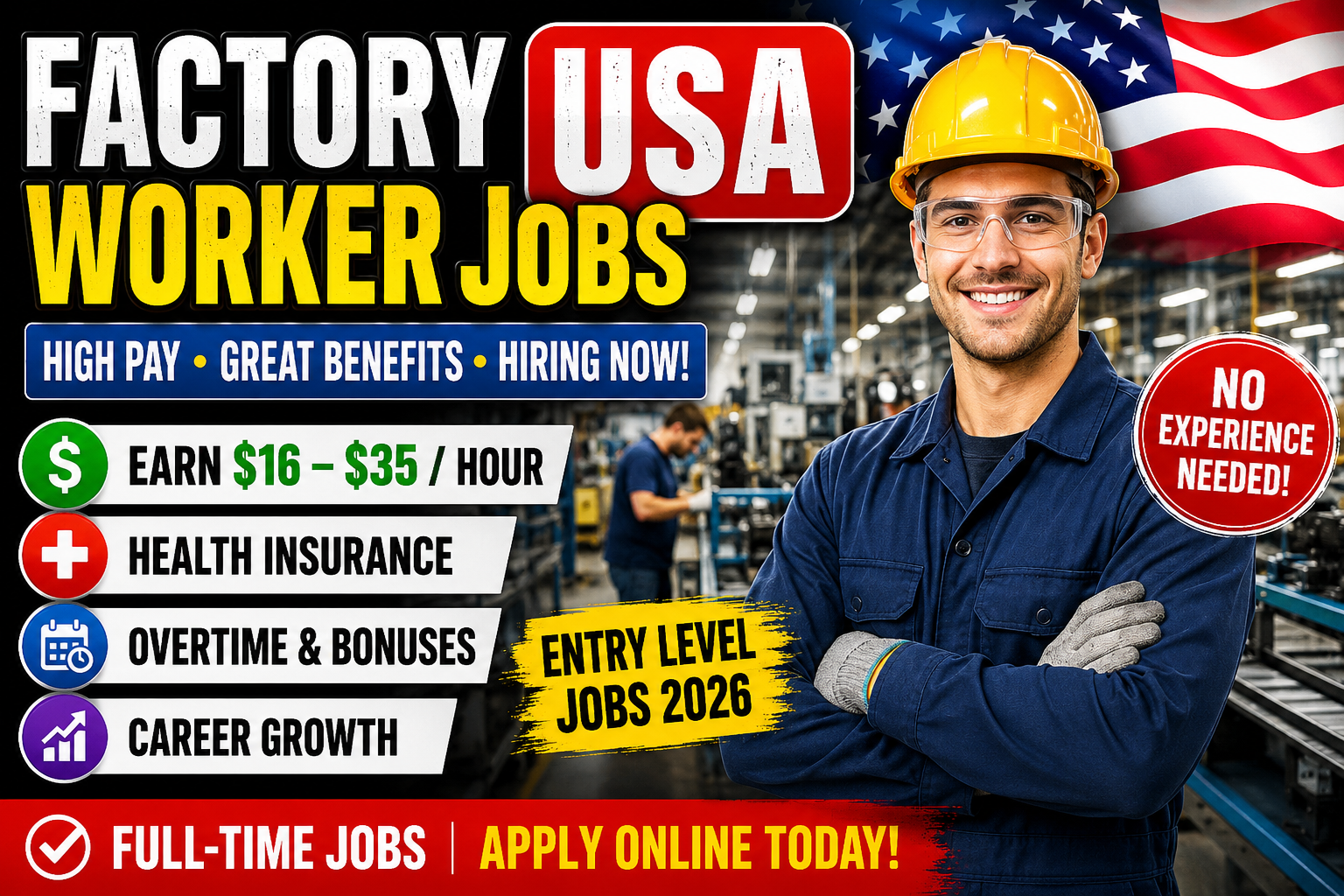
Factory Worker Jobs remain one of the highest-demand entry-level careers across the United States. Manufacturing companies continuously hire workers to produce food, electronics, automobiles, pharmaceuticals, furniture, packaging materials, and consumer goods.
If you’re searching for a stable career with good pay, overtime opportunities, health insurance, and career growth, becoming a factory worker can be an excellent choice.
Whether you’re a U.S. resident or an international job seeker looking for visa-sponsored employment, this guide covers everything you need to know.
📌 What Does a Factory Worker Do?
Factory workers perform different production tasks depending on the industry.
Common responsibilities include:
- Operating production machinery
- Packaging finished products
- Inspecting products for quality
- Loading and unloading materials
- Maintaining workplace cleanliness
- Following safety regulations
- Assembling products
- Monitoring manufacturing equipment
- Reporting machine problems
- Preparing shipments
🏭 Industries Hiring Factory Workers
Factory workers are needed in nearly every manufacturing sector.
Popular industries include:
- 🚗 Automotive Manufacturing
- 🍔 Food Processing
- 📦 Packaging Industry
- 💊 Pharmaceutical Manufacturing
- 💻 Electronics Assembly
- 🪑 Furniture Production
- 🧴 Plastic Manufacturing
- 📄 Paper Mills
- 🥤 Beverage Production
- 🏗️ Building Materials
💰 Factory Worker Salary in the USA (2026)
Average hourly wages depend on experience and location.
| Experience | Hourly Pay | Annual Salary |
|---|---|---|
| Entry-Level | $16–$20 | $33,000–$41,000 |
| Experienced | $21–$27 | $44,000–$56,000 |
| Skilled Operator | $28–$35 | $58,000–$73,000 |
| Supervisor | $35–$45 | $72,000–$95,000 |
Many factories also offer:
- Overtime Pay
- Night Shift Bonus
- Weekend Premium
- Attendance Bonus
- Productivity Incentives
🎯 Skills Required
Employers usually look for:
✅ Basic English communication
✅ Teamwork
✅ Physical stamina
✅ Time management
✅ Machine operation skills
✅ Attention to detail
✅ Safety awareness
✅ Reliability
🎓 Education Requirements
Most factory jobs require:
- High School Diploma (preferred)
- GED accepted
- No college degree required
- On-the-job training provided
Some technical manufacturing roles may require vocational training.
📋 Job Responsibilities
Daily work may include:
- Reading production schedules
- Operating equipment
- Measuring materials
- Packing products
- Labeling boxes
- Quality inspection
- Cleaning workstations
- Recording production data
- Loading pallets
- Reporting equipment issues
🏢 Top Companies Hiring Factory Workers
Some well-known employers include:
- Food manufacturing companies
- Automotive manufacturers
- Electronics producers
- Beverage companies
- Packaging plants
- Furniture manufacturers
- Chemical production facilities
- Medical equipment manufacturers
📍 Best States for Factory Jobs
High-demand manufacturing states include:
- Texas
- Ohio
- Indiana
- Michigan
- Wisconsin
- Tennessee
- Kentucky
- Pennsylvania
- Illinois
- North Carolina
These states often offer competitive wages and numerous job openings.
🕒 Typical Work Schedule
Most factories operate:
- Morning Shift
- Evening Shift
- Night Shift
- Weekend Shift
- 8-hour shifts
- 10-hour shifts
- 12-hour shifts
Many facilities operate 24/7.
🎁 Employee Benefits
Many employers provide:
- ✅ Health Insurance
- ✅ Dental Insurance
- ✅ Vision Coverage
- ✅ Paid Vacation
- ✅ Paid Sick Leave
- ✅ 401(k) Retirement Plan
- ✅ Life Insurance
- ✅ Employee Discounts
- ✅ Paid Training
- ✅ Tuition Assistance
- ✅ Overtime Opportunities
🌎 Visa Sponsorship Opportunities
Some U.S. manufacturers hire international workers through employment-based visa programs when labor shortages exist.
Potential visa options may include:
- Employment Sponsorship
- Temporary Work Programs
- Skilled Manufacturing Positions
Applicants should always verify sponsorship availability in each job posting.
📝 How to Apply
Follow these simple steps:
Step 1
Prepare a professional resume.
Step 2
Search factory worker jobs on major job websites.
Step 3
Apply online.
Step 4
Complete any required assessments.
Step 5
Attend the interview.
Step 6
Pass background checks if required.
Step 7
Complete orientation and begin training.
💡 Resume Tips
Include:
- Previous work experience
- Warehouse experience
- Manufacturing skills
- Forklift certification (if applicable)
- Machine operation experience
- Attendance record
- Safety training
- Teamwork skills
❓ Interview Questions
Common questions include:
- Tell us about yourself.
- Why do you want this job?
- Can you lift heavy items?
- Are you willing to work overtime?
- Can you work weekends?
- Have you worked in manufacturing before?
- How do you maintain workplace safety?
- Can you work in a fast-paced environment?
📈 Career Growth
Many employees advance into higher-paying positions such as:
- Machine Operator
- Production Technician
- Quality Inspector
- Forklift Operator
- Maintenance Technician
- Team Leader
- Production Supervisor
- Operations Manager
⭐ Advantages of Factory Worker Jobs
- High hiring demand
- No college degree required
- Paid training
- Overtime opportunities
- Good benefits
- Career advancement
- Stable employment
- Competitive hourly wages
⚠️ Challenges
- Standing for long periods
- Repetitive tasks
- Shift work
- Weekend schedules
- Physical labor
- Manufacturing deadlines
🔥 Tips to Get Hired Faster
✔ Build a strong resume
✔ Apply to multiple companies
✔ Be flexible with shifts
✔ Learn basic machine operation
✔ Obtain OSHA safety training
✔ Improve English communication
✔ Highlight warehouse or production experience