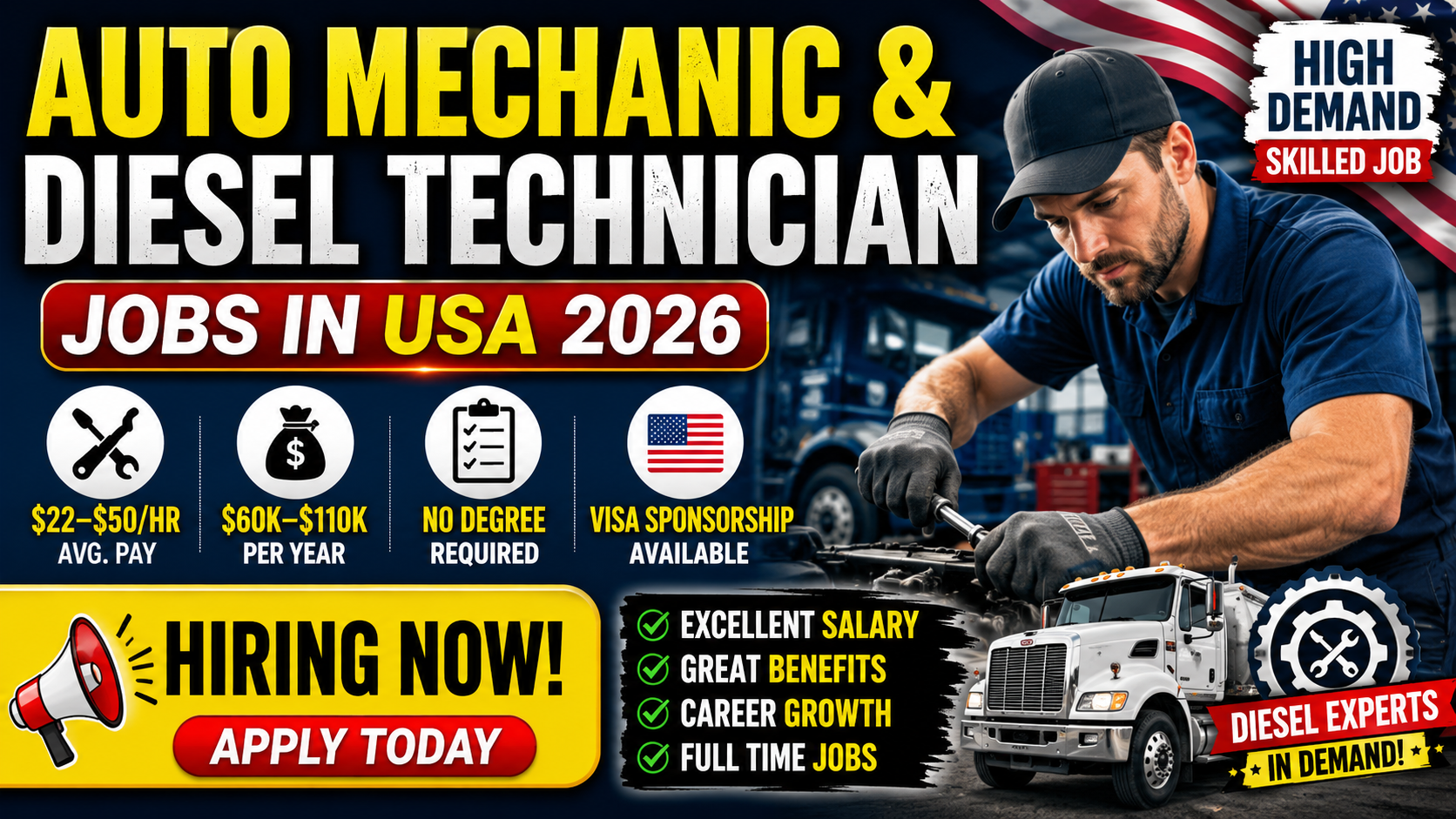
The United States automotive industry continues to experience a strong demand for skilled Auto Mechanics and Diesel Technicians. With millions of passenger vehicles, commercial trucks, buses, agricultural equipment, and construction machinery operating across the country, qualified technicians are essential.
Many employers are actively hiring experienced mechanics, and some companies even offer visa sponsorship for international candidates with the right skills and certifications.
If you’re interested in building a stable, high-paying career in automotive repair, this guide covers everything you need to know.
Why Auto Mechanic Jobs Are in High Demand
Several factors are driving demand:
- Growing number of vehicles
- Aging vehicle fleet
- Expansion of logistics companies
- Heavy truck transportation
- Public transportation maintenance
- Construction equipment servicing
- Skilled labor shortages
This creates excellent career opportunities for beginners and experienced technicians alike.
Types of Auto Mechanic Jobs
1. General Auto Mechanic
Repairs passenger vehicles including:
- Oil changes
- Brake replacement
- Suspension repairs
- Engine diagnostics
- Battery replacement
- Tire services
2. Diesel Technician
Works on:
- Semi-trucks
- Heavy-duty pickups
- Buses
- Construction equipment
- Agricultural machinery
Diesel technicians generally earn higher salaries than standard auto mechanics.
3. Fleet Maintenance Technician
Maintains company vehicles for:
- Delivery companies
- Government agencies
- Municipal fleets
- Rental companies
4. Heavy Equipment Mechanic
Repairs:
- Excavators
- Bulldozers
- Forklifts
- Cranes
- Loaders
5. Mobile Mechanic
Travels directly to customer locations for repairs and maintenance.
Job Responsibilities
Daily duties include:
- Diagnosing mechanical issues
- Repairing engines
- Transmission servicing
- Brake repairs
- Electrical troubleshooting
- Steering and suspension repairs
- HVAC repair
- Computer diagnostics
- Oil and filter replacement
- Preventive maintenance
- Test driving vehicles
- Preparing repair reports
Skills Required
Successful technicians should have:
- Mechanical aptitude
- Problem-solving skills
- Computer diagnostic knowledge
- Electrical troubleshooting
- Hand tool experience
- Hydraulic systems knowledge
- Diesel engine repair skills
- Safety awareness
- Communication skills
- Time management
Education Requirements
Most employers prefer:
- High School Diploma or GED
- Automotive Trade School
- Vocational Training
- Technical Diploma
- Community College Program
Preferred Certifications
Candidates with certifications often receive higher salaries.
Popular certifications include:
- ASE Certification
- Diesel Technology Certification
- HVAC Certification
- Brake Certification
- Engine Performance Certification
- Electrical Systems Certification
Experience Requirements
Entry-Level
- No experience
- Internship
- Apprenticeship
Salary:
$18–$24/hour
Mid-Level
2–5 years experience
Salary:
$25–$35/hour
Senior Technician
5+ years
Salary:
$35–$50/hour
Average Salary in USA
| Position | Hourly Pay | Annual Salary |
|---|---|---|
| Auto Mechanic | $22–$35 | $48,000–$72,000 |
| Diesel Technician | $28–$45 | $60,000–$95,000 |
| Fleet Technician | $30–$45 | $65,000–$90,000 |
| Heavy Equipment Mechanic | $35–$55 | $75,000–$110,000 |
Experienced technicians working overtime can earn over $120,000 per year.
Benefits
Many employers provide:
- Health Insurance
- Dental Insurance
- Vision Insurance
- Paid Vacation
- Retirement Plans
- Paid Holidays
- Overtime Pay
- Tool Allowance
- Uniforms
- Safety Equipment
- Paid Training
- Tuition Assistance
- Performance Bonuses
Visa Sponsorship Opportunities
Some employers sponsor qualified international technicians under employment-based visa programs.
Preferred candidates often have:
- 3–5 years experience
- English communication skills
- Technical certifications
- Heavy diesel experience
- ASE certification (preferred)
Industries Hiring Mechanics
Technicians work in:
- Auto dealerships
- Truck repair centers
- Fleet companies
- Construction companies
- Mining operations
- Public transportation
- Logistics companies
- Agricultural businesses
- Equipment rental companies
- Manufacturing plants
Tools Used
Common equipment includes:
- Diagnostic scanners
- Hydraulic lifts
- Air compressors
- Torque wrenches
- Brake lathes
- Tire balancing machines
- Engine analyzers
- Welding equipment
- Battery testers
- Electrical meters
Career Growth
Career progression may include:
- Apprentice
- Junior Technician
- Certified Technician
- Master Technician
- Shop Supervisor
- Service Manager
- Fleet Maintenance Manager
- Business Owner
Tips to Get Hired Faster
- Build a strong resume.
- Earn ASE certifications.
- Learn diesel diagnostics.
- Gain hands-on workshop experience.
- Improve English communication.
- Practice computer diagnostic software.
- Obtain a valid driver’s license if possible.
- Apply to multiple employers.
Who Should Apply?
These roles are ideal for:
- Automotive graduates
- Diesel mechanics
- Heavy equipment technicians
- Vocational students
- Experienced mechanics
- International skilled workers seeking U.S. opportunities
Frequently Asked Questions (FAQs)
Do I need experience?
Some entry-level positions hire beginners, but experience increases earning potential.
Is a degree required?
No. A vocational certificate or trade school diploma is often sufficient.
Can foreigners apply?
Yes. Some employers offer visa sponsorship for skilled technicians.
Is overtime available?
Yes. Many repair shops and fleet companies offer overtime, increasing annual income.
Which specialization pays the most?
Heavy equipment and diesel technicians typically earn the highest salaries.