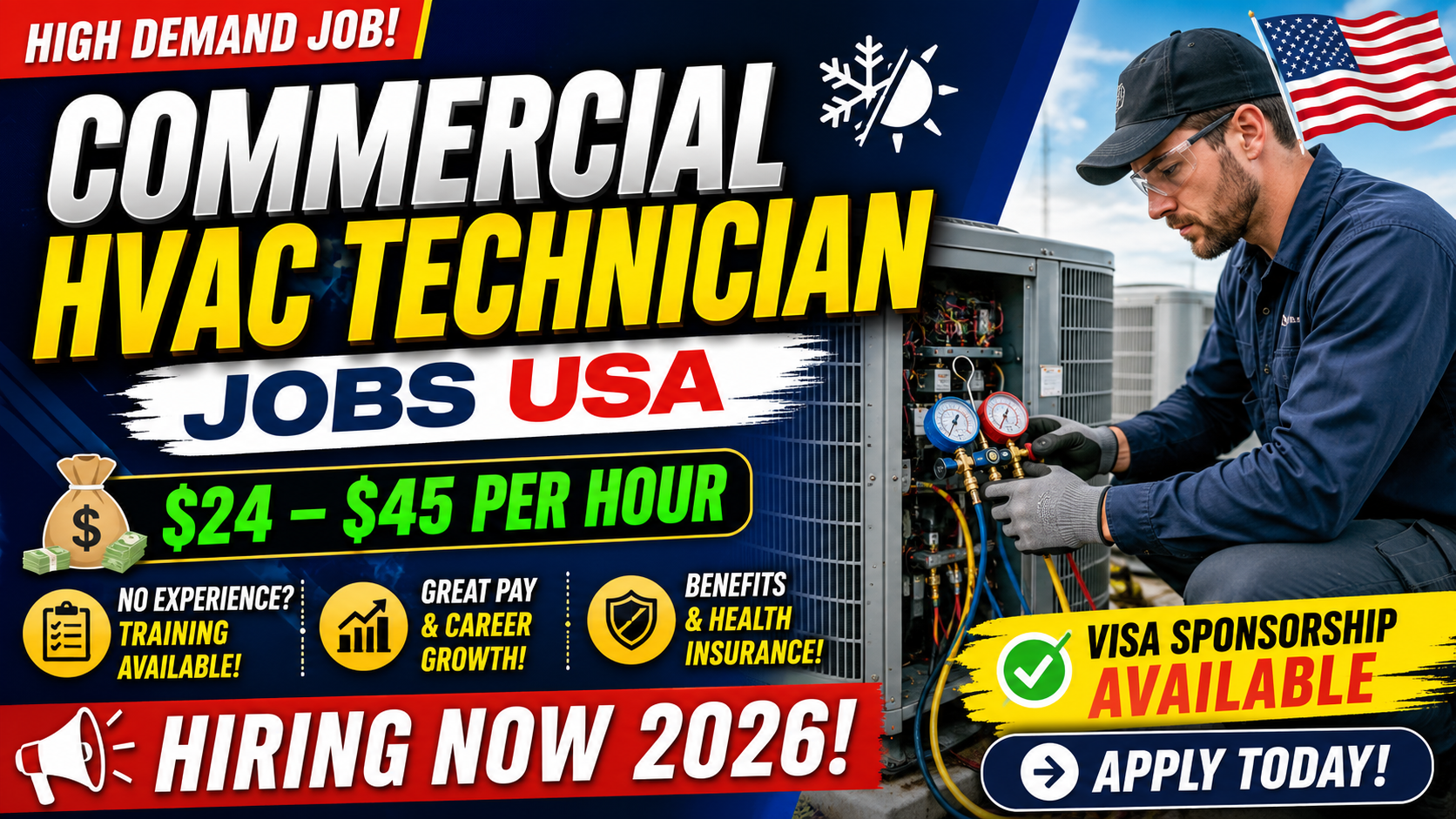
Salary, Requirements, Visa Sponsorship, How to Apply & Career Growth
SEO Title: Commercial HVAC Technician Jobs USA 2026 – Salary, Requirements, Visa Sponsorship & How to Apply
Meta Description: Looking for Commercial HVAC Technician Jobs in the USA? Learn salary, qualifications, certifications, job responsibilities, visa sponsorship opportunities, top employers, and step-by-step application process in this complete guide.
Commercial HVAC Technician jobs are among the highest-paying skilled trade careers in the United States. As commercial buildings continue to expand, companies urgently need qualified HVAC technicians to install, repair, and maintain heating, ventilation, and air conditioning systems.
Whether you’re an experienced technician or someone planning to start a career in HVAC, this guide covers everything you need to know about Commercial HVAC Technician Jobs in the USA.
What is a Commercial HVAC Technician?
A Commercial HVAC Technician installs, services, maintains, and repairs HVAC systems in commercial buildings such as:
- Office Buildings
- Hospitals
- Schools
- Shopping Malls
- Airports
- Hotels
- Manufacturing Plants
- Warehouses
- Government Buildings
Unlike residential HVAC work, commercial systems are larger, more complex, and require specialized technical knowledge.
Why Commercial HVAC Jobs are in High Demand?
The demand continues to increase because:
- Aging HVAC infrastructure
- Growth in commercial construction
- Energy-efficient building upgrades
- Skilled labor shortage
- Expansion of healthcare facilities
- Industrial warehouse growth
- Smart building technology adoption
This makes HVAC one of America’s most stable trade careers.
Job Responsibilities
Commercial HVAC Technicians typically perform:
- Install HVAC equipment
- Diagnose system problems
- Repair compressors
- Replace motors
- Install ductwork
- Read blueprints
- Perform preventive maintenance
- Install refrigeration systems
- Repair ventilation equipment
- Test electrical components
- Replace thermostats
- Charge refrigerant
- Perform safety inspections
- Complete service reports
- Customer communication
Types of Commercial HVAC Jobs
Installation Technician
- New construction
- Commercial projects
- Equipment setup
Service Technician
- Emergency repairs
- Troubleshooting
- Maintenance
Maintenance Technician
- Scheduled inspections
- Filter replacement
- System optimization
Refrigeration Technician
- Walk-in coolers
- Freezers
- Industrial refrigeration
Controls Technician
- Building automation systems
- Smart thermostats
- HVAC controls
Required Skills
Successful HVAC technicians should have:
- Mechanical aptitude
- Electrical knowledge
- Troubleshooting skills
- Blueprint reading
- Welding basics
- Refrigeration knowledge
- Plumbing understanding
- Safety awareness
- Physical fitness
- Communication skills
- Customer service
- Time management
Educational Requirements
Most employers require:
- High School Diploma or GED
- HVAC Trade School Certificate (Preferred)
- Apprenticeship Training
- Technical College Diploma
Some employers hire entry-level candidates and provide on-the-job training.
Important Certifications
Having certifications increases salary significantly.
Recommended certifications include:
- EPA Section 608 Certification
- OSHA 10
- OSHA 30
- HVAC Excellence
- NATE Certification
- Universal Refrigerant License
- CPR & First Aid
Experience Requirements
Entry-Level
- 0–2 Years
- Helper or Apprentice
Mid-Level
- 2–5 Years
- Service Technician
Senior Technician
- 5–10 Years
- Commercial Specialist
Lead Technician
- 10+ Years
- Supervisor
Average Salary in USA
| Experience | Annual Salary |
|---|---|
| Entry Level | $45,000–$60,000 |
| Experienced | $60,000–$85,000 |
| Senior Technician | $85,000–$110,000 |
| Lead HVAC Technician | $110,000–$140,000+ |
Hourly Pay:
- $22–$45 per hour
- Overtime available
- Weekend bonuses
- Emergency call pay
Highest Paying States
Commercial HVAC Technicians earn excellent salaries in:
- California
- Texas
- Florida
- New York
- Washington
- Massachusetts
- Colorado
- Illinois
- Arizona
- Nevada
Best Industries Hiring HVAC Technicians
- Construction Companies
- Hospitals
- Manufacturing Plants
- Commercial Property Management
- Schools
- Airports
- Hotels
- Government Agencies
- Industrial Facilities
- Data Centers
Benefits
Most employers offer:
- Health Insurance
- Dental Insurance
- Vision Insurance
- Paid Vacation
- Retirement Plan (401k)
- Overtime Pay
- Paid Holidays
- Company Vehicle
- Tool Allowance
- Uniforms
- Paid Training
- Performance Bonuses
Work Schedule
Common schedules include:
- Full-Time
- Monday–Friday
- Rotating Shifts
- Weekend Availability
- On-Call Emergency Service
- Overtime Opportunities
Tools Used
Commercial HVAC technicians commonly use:
- Digital Multimeter
- Vacuum Pump
- Refrigerant Gauges
- Leak Detector
- Pipe Cutter
- Recovery Machine
- Electrical Testers
- Thermometers
- Power Tools
- Hand Tools
Physical Requirements
Candidates should be able to:
- Lift 50–75 lbs
- Climb ladders
- Work outdoors
- Work in confined spaces
- Stand for long hours
- Read wiring diagrams
- Handle heavy equipment
Visa Sponsorship Opportunities
Some U.S. employers sponsor qualified international HVAC technicians through employment-based visa programs.
Candidates with these qualifications have better chances:
- 3+ years experience
- English communication skills
- Trade certifications
- Commercial HVAC experience
- EPA Certification (preferred)
Top Employers Hiring HVAC Technicians
Many companies regularly recruit commercial HVAC professionals, including:
- Johnson Controls
- Carrier
- Trane Technologies
- EMCOR Group
- Comfort Systems USA
- Daikin Applied
- Lennox International
- Johnson Controls Service Division
- Siemens Building Technologies
- Honeywell Building Solutions
Step-by-Step Application Process
Step 1
Prepare an ATS-friendly resume.
Step 2
Include certifications.
Step 3
Highlight commercial HVAC experience.
Step 4
Apply on company career websites.
Step 5
Complete online assessments.
Step 6
Attend technical interviews.
Step 7
Pass background verification.
Step 8
Receive job offer.
Resume Skills
Include keywords like:
- Commercial HVAC
- Preventive Maintenance
- Troubleshooting
- Refrigeration
- HVAC Installation
- HVAC Repair
- Electrical Systems
- Chillers
- Boilers
- Air Handlers
- Heat Pumps
- Building Automation Systems
- EPA 608 Certified
- Blueprint Reading
- Preventive Maintenance
Interview Questions
Common interview questions include:
- Explain the refrigeration cycle.
- What is superheat?
- What causes compressor failure?
- How do you diagnose low airflow?
- Explain HVAC preventive maintenance.
- Describe a difficult repair you completed.
- How do you handle emergency service calls?
- What HVAC software have you used?
- Explain lockout/tagout procedures.
- Why should we hire you?
Career Growth
Commercial HVAC offers excellent advancement opportunities:
- Apprentice
- HVAC Installer
- Service Technician
- Senior Technician
- Lead Technician
- Field Supervisor
- Service Manager
- Project Manager
- Operations Manager
- Business Owner
Tips to Get Hired Faster
- Obtain EPA Section 608 Certification.
- Build hands-on experience through apprenticeships.
- Learn commercial HVAC systems and controls.
- Practice electrical troubleshooting.
- Keep your resume ATS-friendly with relevant keywords.
- Be willing to work overtime and emergency shifts.
- Develop strong communication and customer service skills.
- Continue learning new HVAC technologies and energy-efficient systems.
Frequently Asked Questions (FAQs)
Is Commercial HVAC a good career in the USA?
Yes. It is one of the highest-paying skilled trades with excellent job security, career growth, and overtime opportunities.
Can foreigners apply for Commercial HVAC jobs?
Yes. Some employers sponsor qualified international candidates, especially those with commercial experience and recognized certifications.
What is the average salary?
Most technicians earn between $45,000 and $110,000+ per year, depending on experience, certifications, location, and employer.
Is certification required?
Many employers require EPA Section 608 Certification, and additional certifications such as NATE or OSHA can improve your hiring prospects and salary.
Is previous experience necessary?
Not always. Entry-level roles and apprenticeships are available, but experienced technicians generally have access to higher-paying positions.