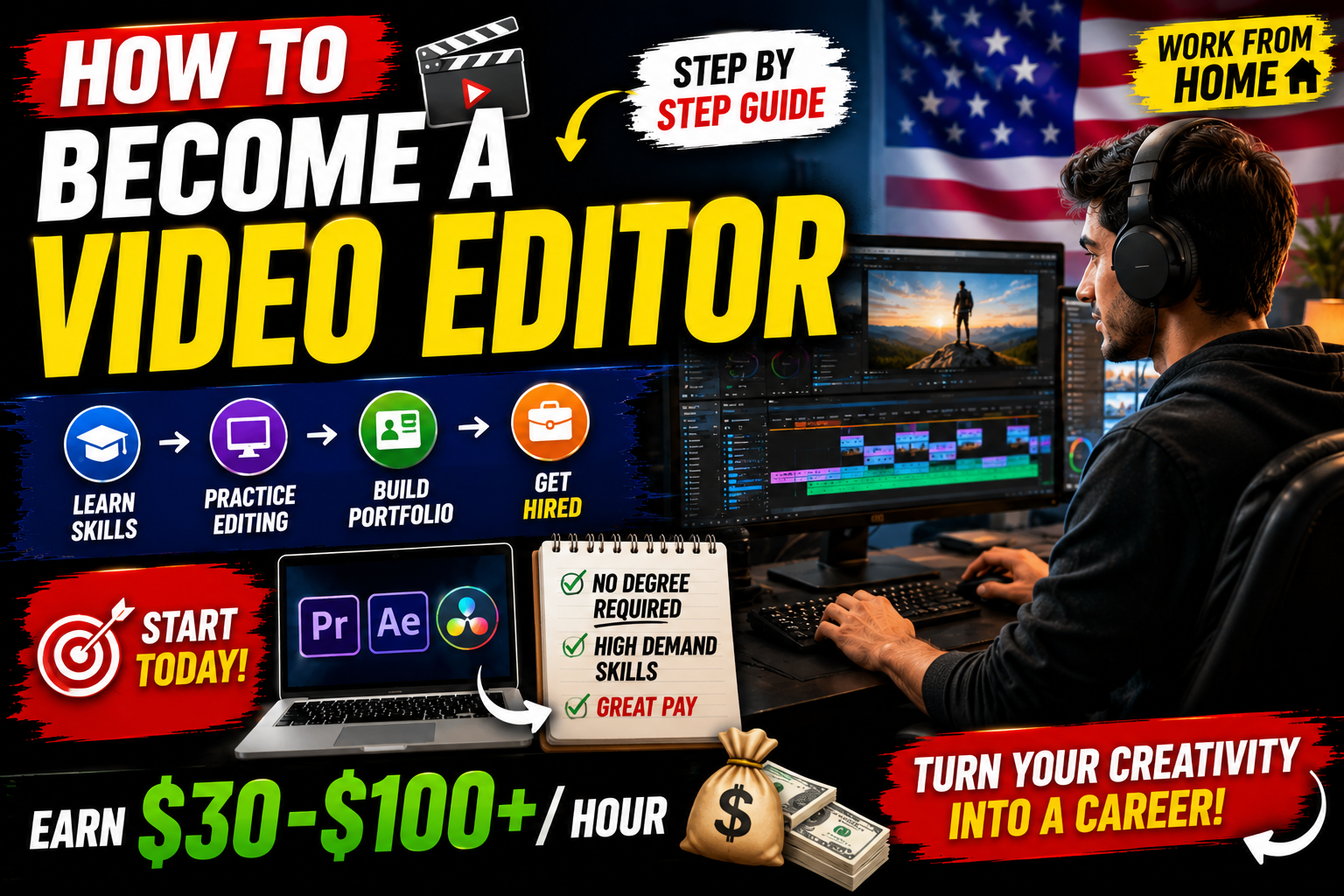
Video editing has become one of the fastest-growing creative careers in the United States. With the rise of YouTube, Netflix, social media, online courses, and digital marketing, businesses need skilled video editors more than ever.
Whether you’re a beginner or someone looking to switch careers, this guide explains everything you need to know about becoming a professional video editor in the USA.
What Does a Video Editor Do?
A video editor transforms raw footage into engaging, professional-quality videos. They work on projects such as:
- YouTube videos
- Movies and TV shows
- Commercial advertisements
- Wedding videos
- Social media content
- Corporate training videos
- Online courses
- Music videos
Daily responsibilities include:
- Cutting and trimming footage
- Adding transitions and visual effects
- Color correction and grading
- Audio editing and mixing
- Motion graphics
- Exporting videos for different platforms
Skills You Need
Successful video editors develop both technical and creative skills.
Technical Skills
- Adobe Premiere Pro
- Final Cut Pro
- DaVinci Resolve
- Adobe After Effects
- Adobe Audition
- Basic Photoshop knowledge
- Video compression and exporting
Soft Skills
- Creativity
- Time management
- Communication
- Attention to detail
- Storytelling
- Problem-solving
Educational Requirements
A college degree is helpful but not always required.
Many employers hire editors based on their portfolio rather than formal education.
Useful educational paths include:
- Bachelor’s degree in Film Production
- Digital Media
- Multimedia Arts
- Online video editing courses
- Professional certifications
Best Video Editing Software
Most employers in the USA expect familiarity with at least one professional editing program.
Popular options include:
- Adobe Premiere Pro
- DaVinci Resolve
- Final Cut Pro
- Adobe After Effects
- Avid Media Composer
Beginners often start with DaVinci Resolve because its free version includes many professional features.
Build a Strong Portfolio
Your portfolio is often more important than your resume.
Include projects such as:
- YouTube videos
- Short films
- Commercial edits
- Instagram Reels
- TikTok videos
- Event highlights
- Motion graphics
Upload your work to YouTube, Vimeo, or your own website.
Gain Real Experience
Practical experience is essential.
Consider:
- Freelancing
- Internships
- Volunteer projects
- Editing for local businesses
- Working with content creators
- Personal video projects
Each completed project helps improve your editing skills and strengthens your portfolio.
Where to Find Video Editor Jobs in the USA
Many companies hire full-time, part-time, and freelance video editors.
Popular job sources include:
- LinkedIn Jobs
- Indeed
- Glassdoor
- Upwork
- Fiverr
- Production companies
- Marketing agencies
- Television networks
- Film studios
Remote video editing jobs have also become increasingly common.
Average Salary of a Video Editor in the USA
Salary depends on experience, location, and specialization.
Typical annual earnings:
- Entry-Level: $40,000–$55,000
- Mid-Level: $55,000–$80,000
- Senior Video Editor: $80,000–$120,000+
- Freelancers: Income varies depending on clients and project volume.
Editors with expertise in motion graphics, visual effects, and animation often earn higher salaries.
Career Growth Opportunities
After gaining experience, video editors can advance into roles such as:
- Senior Video Editor
- Motion Graphics Designer
- Creative Director
- Video Producer
- Post-Production Supervisor
- Film Editor
- Content Creator
- YouTube Channel Manager
Many professionals also start their own freelance businesses or editing agencies.
Tips for Success
- Practice editing every day.
- Learn keyboard shortcuts to improve speed.
- Stay updated with editing trends.
- Build a professional portfolio website.
- Network with filmmakers and creators.
- Learn color grading and motion graphics.
- Keep improving through online tutorials and courses.
Frequently Asked Questions
Can I become a video editor without a degree?
Yes. Many employers hire editors based on skills, experience, and portfolio rather than a college degree.
Which software should beginners learn?
Adobe Premiere Pro and DaVinci Resolve are among the best options for beginners and professionals.
Is video editing a good career in the USA?
Yes. The demand for video content continues to grow across entertainment, marketing, education, and social media, creating excellent career opportunities for skilled editors.
Can I work remotely as a video editor?
Absolutely. Many companies and clients hire remote editors, allowing you to work from home with a reliable computer and internet connection.
Final Thoughts
Video editing is an exciting and rewarding career with excellent opportunities across the United States. By mastering professional editing software, building a strong portfolio, gaining practical experience, and continuously improving your skills, you can establish a successful career in this fast-growing industry.
Whether you want to work for a media company, become a freelance editor, or create content for online platforms, now is a great time to begin your journey as a professional video editor.